On-site Piano Tuning in Vienna
A perfectly tuned piano is the foundation of every musical performance. We bring the precision of our Viennese workshop directly to your living room, studio, or educational institution to restore the harmonic balance of your instrument.
Book an Appointment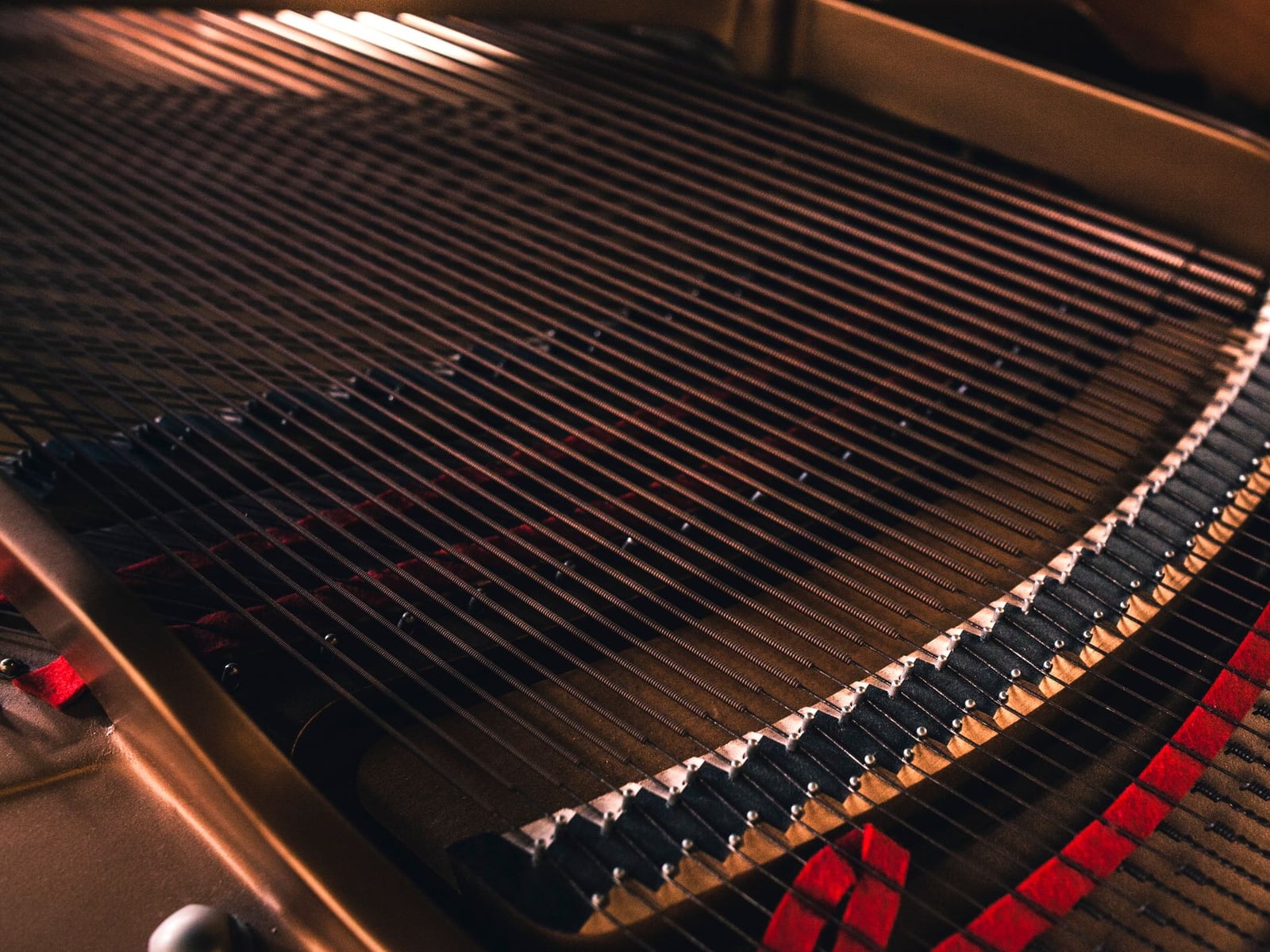
Tuning a piano is a complex process that goes far beyond simply turning tuning pins. Because pianos are constructed from organic materials such as spruce, maple, and felt, they react sensitively to the specific climatic conditions of their environment. Changes in temperature and fluctuations in humidity cause the tension of the strings to shift, which inevitably leads to intonation errors and a loss of harmonic purity.
Our on-site piano tuning service in Vienna is designed to preserve the sonic integrity of your instrument without the need for risky and expensive transport to our workshop. Using modern equipment combined with a trained ear, we ensure that your instrument not only reaches the correct reference frequency but also maintains a homogeneous timbre across all octaves, providing a stable foundation for both practice and performance.
The Tuning Process in 4 Steps
1. Acoustic Assessment
Upon arrival, we perform an initial analysis of the instrument. We check the current state of the tuning, inspect the action for obvious mechanical defects, and analyze the room acoustics and ambient temperature to determine the optimal approach for the tuning process.
2. Rough Tuning and Stabilization
First, the instrument is brought into a stable range. We correct significant deviations to distribute the tension evenly across the cast-iron frame. This is particularly critical for instruments that have not been maintained for several years.
3. Fine-Tuning the Octaves
Using high-precision tuning tools and our own acoustic control, every single string is adjusted exactly to the desired frequency. We pay special attention to pure intonation and the harmonic alignment of the unisons to ensure a rich, focused sound.
4. Final Inspection and Advice
Finally, we play through the entire keyboard to correct the last nuances. We provide you with detailed advice on caring for your piano within the current room climate to maintain tuning stability for as long as possible.
Who is this service for?
Our mobile piano tuning service is tailored to a diverse group of music lovers and professionals across Vienna. This primarily includes private individuals who use their instruments for home practice or study and desire regular maintenance without the logistical burden of moving the instrument.
We also support music schools, conservatories, and private teachers, for whom precise intonation is essential for the training of students. Institutions such as hotels, cafés, or galleries that utilize pianos as part of their atmosphere benefit from our discreet and efficient on-site service. For collectors of historical instruments, we offer a particularly gentle approach to preserve the unique character and age of the instrument.
How the on-site work is carried out
After scheduling an appointment, our experts arrive punctually at your location. We bring all necessary professional tools, from high-quality tuning levers to electronic measurement devices. Since the work is performed directly on the instrument, no additional space is required other than the area immediately surrounding the piano.
Throughout the process, we work with concentration and quiet precision. Should we discover mechanical defects during the tuning—such as damaged hammers or loose tuning pins—we will notify you immediately. We perform only the work included in the tuning service; more extensive repairs are discussed separately and documented in a new cost estimate agreement.
What the client should prepare
To ensure a smooth process, we ask that you clear access to the instrument. In particular, the piano lid must be able to open fully, and there should be sufficient space for the technician behind or above the instrument.
We also recommend that the instrument remains at the room temperature where it will permanently stand for at least 24 hours before the appointment. Please avoid placing the piano directly next to a heater or in a drafty area immediately before the visit, as this can directly affect the precision of the tuning.
The Result: What you receive
At the end of the visit, you receive a perfectly tuned instrument that allows for pure and harmonic sound development. The intonation is consistent across the entire spectrum, which is especially noticeable when playing chords and complex harmonies.
Additionally, you will receive a brief written report on the condition of your instrument. This includes information about the work performed and specific recommendations for optimal placement in the room and humidity regulation to increase tuning stability. We document any signs of wear so that you can plan long-term maintenance.
Timeframe and Appointments
A standard tuning typically takes between 60 and 90 minutes. If the instrument requires a pitch raise because it has not been maintained for years, this timeframe may be extended. We coordinate appointments flexibly within our opening hours (Mon-Fri 10-7, Sat 11-4).
We recommend regular tuning every six to twelve months, depending on the location and intensity of use. This continuity minimizes the stress on the frame and extends the lifespan of the action.
What is NOT included in the service
Please note that pure piano tuning does not include mechanical regulation. This includes tasks such as adjusting key height, fixing "clattering" keys, or voicing the hammers (timbre correction). These services are separate craft processes.
Similarly, the replacement of strings, the repair of cracks in the soundboard, or the internal cleaning of dust and debris are not part of the standard tuning. Should such work be necessary, we are happy to provide an individual offer. We do not perform work on instruments containing materials from protected species (CITES) without the corresponding documentation.
Pricing and Value Added Tax
Our prices are transparent and fairly calculated. The prices listed in the following table are final prices including the statutory Austrian VAT of 20%. For commercial customers (B2B), we list the net amount separately.
Billing is per visit. Travel within the city area of Vienna is already included in the flat rates for tuning. Should additional services be requested during the appointment, this will be done by prior agreement and added accordingly.
| Service | Price incl. VAT (20%) | Price excl. VAT | Unit |
|---|---|---|---|
| Standard Tuning | 140.00 € | 116.67 € | Visit |
| Pitch Raise & Tuning | 220.00 € | 183.33 € | Visit |
Detailed Scope of Work
- Inspection of the general mechanical function of the instrument
- Verification of tuning pin stability within the pinblock
- Precise tuning of all strings to the reference frequency (A = 440Hz or as requested)
- Harmonization of unisons for a full, rich sound
- Control of octave purity across the entire keyboard
- Advice on optimal humidity (target range 45-55%)
- Brief report on the technical condition of the instrument
Frequently Asked Questions (FAQ)
How often should my piano be tuned?
On average, we recommend tuning every six to twelve months. Since pianos react to humidity and temperature, the interval depends heavily on the location. Instruments in rooms with strong temperature fluctuations require more frequent intervals.
Why is a pitch raise sometimes necessary?
If an instrument has not been tuned for several years, the string tension is often very uneven. In this case, a pitch raise must be performed first to stabilize the system before precise fine-tuning is possible.
Do you visit districts other than Neubau?
Yes, we offer our services throughout all districts of Vienna. Travel is already included in our standard prices for on-site piano tuning.
What happens if the piano does not hold its tune?
If an instrument goes out of tune very quickly despite professional tuning, this is often due to worn-out tuning pins or extreme climatic conditions. In such cases, we advise you on possible repairs or the installation of a humidifier.
Further Information
An important aspect of instrument care is the correct handling of the instrument. Learn more in our guide on how to manage transport safely if you ever need to move your instrument: Safe Transport of Instruments.
All our services are subject to the provisions of our Terms and Conditions. For an overview of all our craft offerings, please visit our Services page.